History
Florence: where opera began
How a circle of Florentine humanists, Jacopo Peri’s Dafne and the 1600 Euridice at Palazzo Pitti gave the world opera, in plain sentences with sources.
Book the Nessun dorma concert ↗Quick answer
Opera began in Florence in the closing years of the 1500s. A circle of humanists, musicians and poets that met at Count Giovanni de’ Bardi’s house tried to revive ancient Greek drama, and their experiments led to a new sung style. Jacopo Peri’s Dafne, produced in Florence in 1598, is called the first opera, and his Euridice of 1600, staged at Palazzo Pitti, is the oldest to survive.
The circle at Bardi’s house
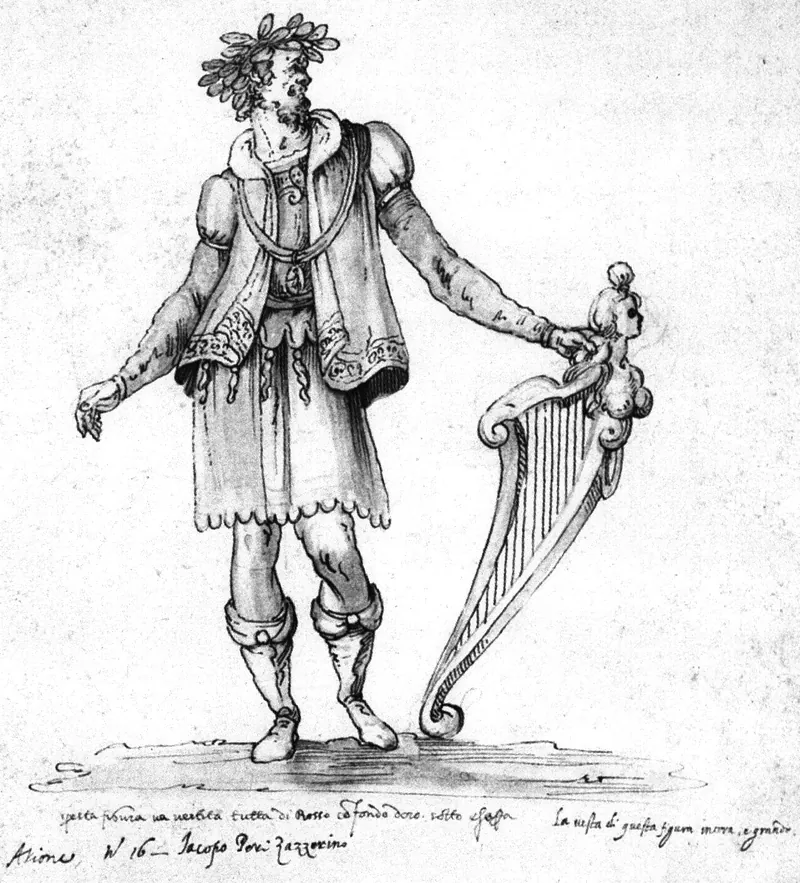
In Florence, says Wikipedia, Count Giovanni de’ Bardi welcomed humanists, musicians, poets and thinkers to his house, and the circle is known as the Florentine Camerata or the Camerata de’ Bardi. Its first recorded gathering took place on 14 January 1573, and it was busiest from 1577 to 1582. Best-known members besides Bardi were Giulio Caccini, Pietro Strozzi and Vincenzo Galilei, the father of Galileo. The poet Ottavio Rinuccini, who later wrote the first opera libretti, may have taken part as a young man.
What they wanted
The group believed music had become corrupted and that reviving ancient Greek forms could improve both music and society. Its experiments largely concerned the Greek dramatic style, and it criticised polyphony, in which several lines sound at once, for obscuring the sung text. Wikipedia quotes the group’s aim as finding means to bring music closer to that of classical times. The solo style that followed put the words first, and tried out on stage it became opera.
A new way of singing
The experiments led to the stile recitativo, a style of sung speech that later became closely tied to opera. The early solo style was called monody. Wikipedia names Emilio de’ Cavalieri as the first to use the new recitative style. Opera still uses recitative today: Wikipedia describes it as the plot-driving passages sung in a style designed to imitate and emphasise the inflections of speech, set against the arias, where a character pauses to express a feeling in a more structured melody.
Dafne, the first opera
In 1598, Wikipedia says, Jacopo Peri and Ottavio Rinuccini produced Dafne, which the article describes as the first opera, though its music is lost. The article on opera adds that the piece was written around 1597 and played in Florence a year later. Because Dafne survives only in descriptions, the work that opera history usually points to is the next one, which has both its words and its music.
Euridice at Palazzo Pitti
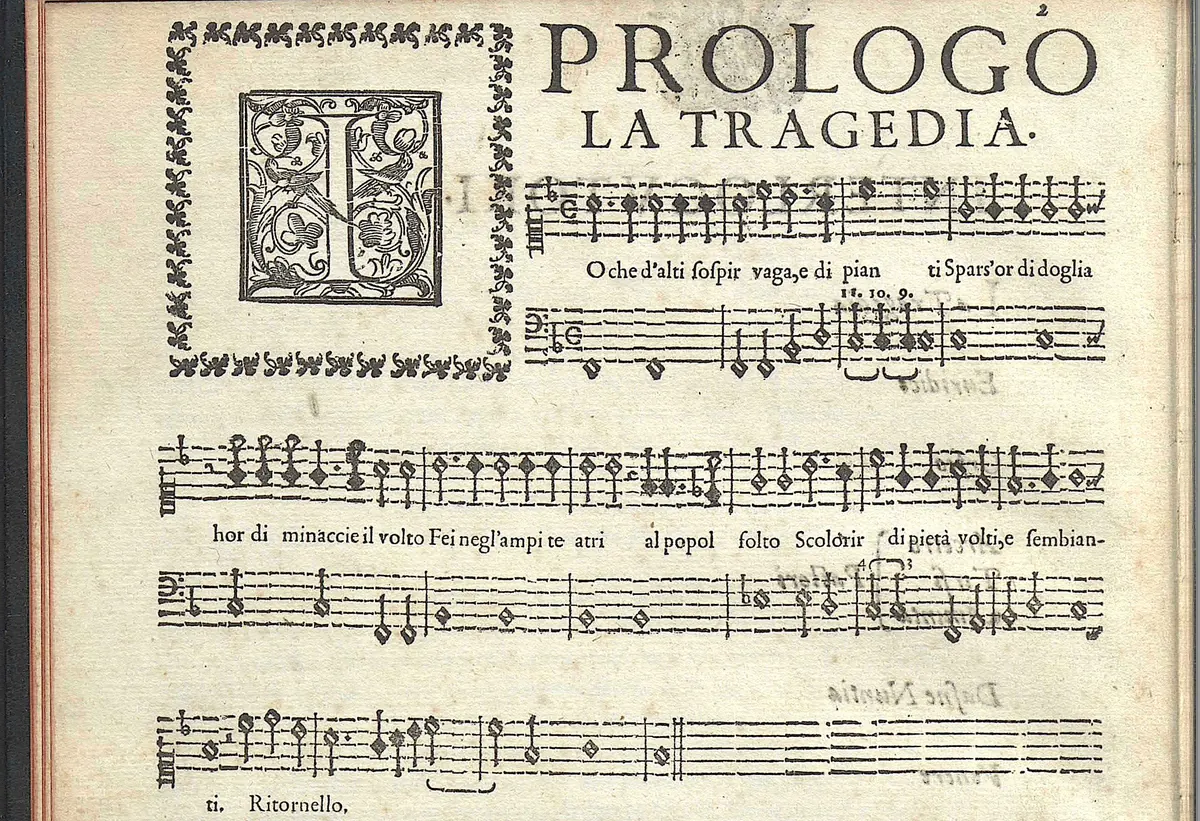
Peri’s Euridice, to a libretto by Rinuccini based on books X and XI of Ovid’s Metamorphoses, was first performed on 6 October 1600 at the Palazzo Pitti in Florence, with Peri himself singing Orfeo. Wikipedia says it was created for the marriage of King Henry IV of France and Maria de Medici, and calls it the first such musical drama to survive to the present day. Giulio Caccini wrote his own Euridice on the same libretto and published it first.
The places that remain
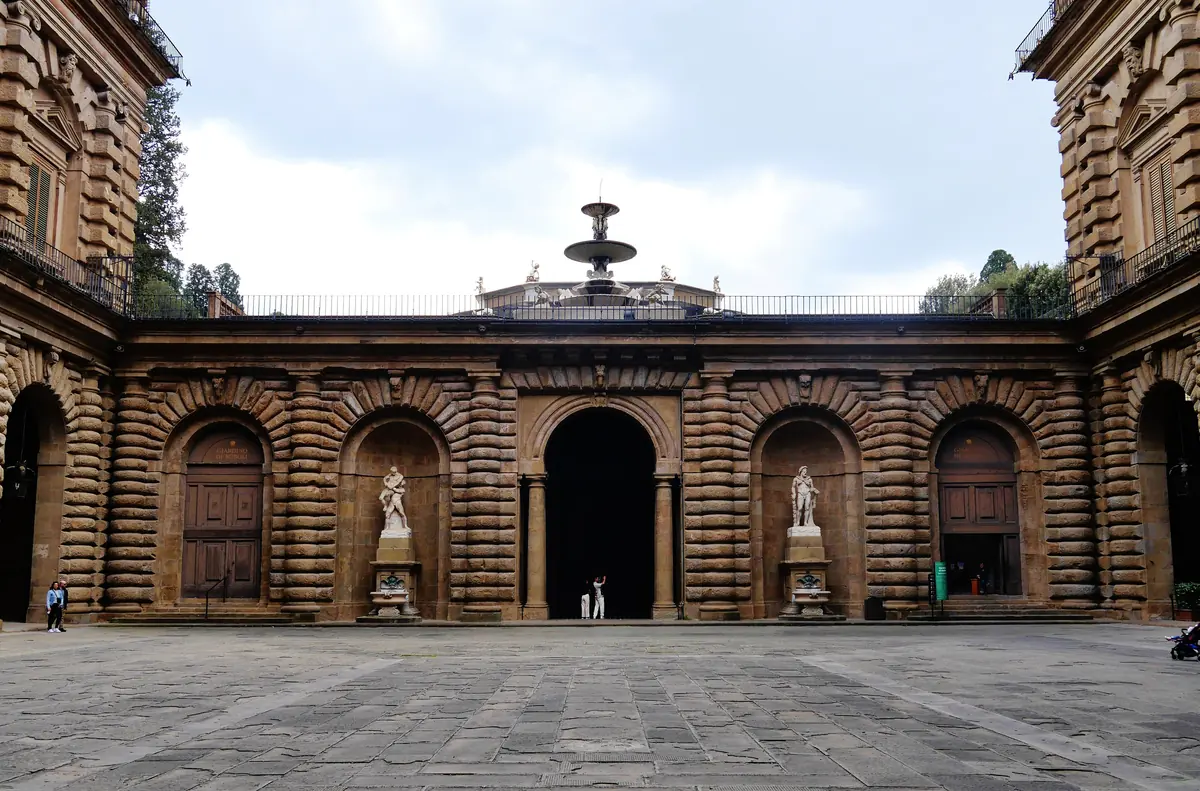
Palazzo Pitti still stands. In 1565, says Wikipedia, Cosimo I de’ Medici had Giorgio Vasari build a passage connecting Palazzo Vecchio and Palazzo Pitti, part of which runs above the Ponte Vecchio. The Cattedrale dell’Immagine, where the Nessun dorma concert is held, is a short distance from that bridge. You cannot hear Peri’s original performance, but you can stand in the same part of the city where the new style was first sung.
From Florence to the arias you hear today
Opera spread from Florence across Italy and beyond, and the arias in the concert come from much later. Wikipedia places the first performances of La traviata and Rigoletto at La Fenice in Venice, in 1853 and 1851, and Tosca at the Teatro Costanzi in Rome in 1900. Turandot followed at La Scala in Milan in 1926. None of them began in Florence, which is why the concert is best heard as a tribute to the form the city invented.
Read next: Opera concert in Florence
Frequently asked questions
Where did opera begin?
In Florence, in the late 1500s, among humanists and musicians who gathered at Count Giovanni de’ Bardi’s house.
What was the first opera?
Wikipedia calls Jacopo Peri’s Dafne, produced in Florence in 1598, the first opera, but its music is lost.
What is the oldest surviving opera?
Peri’s Euridice, first performed on 6 October 1600 at the Palazzo Pitti in Florence.
Sources